TL;DR
AI will define the future of voice communications because it makes business conversations faster, smarter, more scalable, and more useful. Voice is still one of the most important ways businesses sell, support, schedule, solve problems, and collaborate, but AI is changing what voice can do and what buyers now expect from it. In practice, that means the future will not belong to companies that simply connect calls. It will belong to companies that use AI to improve outcomes from every conversation.
Table of Contents
- What does AI in voice communications actually mean?
- Why is voice becoming more strategic again?
- Why will AI define the future of voice communications instead of traditional phone systems?
- Why is AI-powered voice more valuable than legacy UCaaS alone?
- How does AI improve customer experience in voice communications?
- How does AI help employees work faster and more effectively?
- How does AI make voice communications more scalable?
- Why is AI turning voice conversations into a source of business intelligence?
- Why will AI matter more as customer expectations continue to rise?
- What real buyer questions should businesses ask?
- What does the future of voice communications look like with AI?
- Frequently Asked Questions
For years, businesses treated voice as infrastructure. A phone system needed to work, calls needed to connect, and teams needed a way to talk to customers and each other. That was important, but it was also limited. Voice was often viewed as a basic operational requirement rather than a strategic advantage.
That is changing quickly. AI is redefining voice communications from a system of connection into a system of intelligence. Instead of only moving calls from one endpoint to another, modern voice environments can now help businesses respond faster, route smarter, assist employees, capture insights, and improve consistency across every interaction.
That shift matters because voice still plays an outsized role in business. It is where urgency shows up, where nuance matters, where difficult issues get resolved, and where trust is often built or lost. In sales, service, operations, healthcare, education, and professional services, voice remains one of the most direct and high-impact communication channels a business has.
The reason AI will define the future of voice communications is not that voice is going away. It is the opposite. Voice is becoming more valuable, and AI is making it more effective.
What Does “AI in Voice Communications” Actually Mean?
AI in voice communications means using artificial intelligence to improve how business calls and voice interactions are answered, routed, supported, summarized, analyzed, and optimized.
In this context, voice communications includes business phone calls, internal collaboration, customer support conversations, contact center interactions, meetings, and other spoken business exchanges. AI (Artificial Intelligence) refers to technologies that can understand language, detect intent, automate repetitive tasks, generate summaries, surface insights, and support human decision-making. Business voice communications is the broader category that spans cloud calling, UCaaS, CCaaS, meetings, front-desk call handling, analytics, and workflow support.
That definition matters because many buyers still think of AI in voice as one narrow feature. It is much broader than that. AI can support conversational call handling, intelligent routing, agent assistance, automated summaries, conversation analysis, meeting recaps, and workflow automation. The point is not full autonomy. The point is better business performance from every voice interaction.
Why Is Voice Communication Becoming More Strategic for Businesses Again?
Voice communication is becoming more strategic again because it remains one of the fastest, highest-trust, highest-context ways for businesses to engage customers and employees.
Email is useful, but it is slow. Chat is convenient, but it is not always the best channel for complexity, urgency, or emotion. Forms and self-service are efficient, but they can fall short when a person needs guidance, reassurance, or a fast answer. Voice still stands apart when speed, clarity, nuance, and immediate action matter most.
That is one reason customer experience leaders are under pressure to get voice right. Zendesk reports that 72 percent of customers want immediate service, and its 2026 customer experience statistics page says 52 percent of customers will switch to a competitor after a single negative impression. Zendesk also cites Forrester research showing customers are 2.4 times more likely to stay with a brand when their problems are solved quickly.
In other words, voice is not becoming irrelevant. It is becoming more consequential. When a customer calls, the business is often being evaluated in real time.
Why Will AI Define the Future of Voice Communications Instead of Traditional Phone Systems?
AI will define the future of voice communications because traditional phone systems were built to connect calls, while AI-powered voice environments are built to improve outcomes.
Traditional phone systems do important things. They provide dial tone, extensions, transfers, voicemail, and call routing. But they are mostly reactive. They depend heavily on people to interpret intent, move callers to the right place, capture context, and manually handle repetitive front-end tasks.
AI-powered voice changes that equation. Instead of simply passing calls through a system, AI can help identify why someone is calling, direct them more intelligently, reduce repetitive handling, support more consistent first-response experiences, and turn conversations into usable data. That is a very different value proposition.
This is the difference between telephony infrastructure and communications intelligence. One connects the conversation. The other improves what the conversation produces.
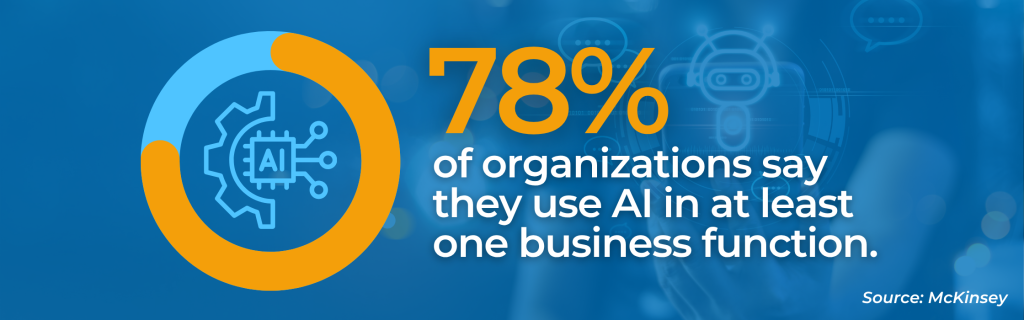
That distinction is becoming more important as AI adoption accelerates across business functions. McKinsey reports that 78 percent of respondents say their organizations use AI in at least one business function, and 71 percent say their organizations regularly use generative AI in at least one business function. As AI becomes more embedded across the business, voice will not remain an isolated, unintelligent layer for long.
Why Is AI-Powered Voice More Valuable Than Legacy UCaaS Alone?
AI-powered voice is more valuable than legacy UCaaS alone because it adds intelligence, automation, and insight to cloud communications workflows that were previously manual.
Legacy UCaaS was a major step forward from on-premises telephony. It brought flexibility, easier administration, remote access, and cloud-based delivery. But in many cases, legacy UCaaS still functions mostly as cloud calling without meaningful embedded intelligence.
That is why the market is moving again. The progression is no longer just on-prem phone systems to cloud phone systems. It is now cloud phone systems to AI-enhanced communications platforms.
The difference is substantial:
- Traditional phone systems connect calls.
- Legacy UCaaS delivers those calls from the cloud.
- AI-powered voice helps the business respond better, work faster, and learn more from what happened.
That means the conversation shifts from access to outcomes. Buyers are no longer evaluating only uptime, deployment, and features. They are increasingly evaluating whether voice can improve responsiveness, reduce effort, support employees, and generate operational insight.
How Does AI Improve Customer Experience in Voice Communications?
AI improves customer experience in voice communications by helping businesses respond faster, route smarter, stay available longer, and deliver more consistent interactions.
Many voice pain points are familiar: long hold times, missed calls, confusing menus, repeated transfers, after-hours dead ends, and inconsistent service depending on who answers. AI helps address those problems by making the first layer of voice interaction more responsive and more intelligent.
That matters because customer expectations are moving upward, not downward. Zendesk’s 2025 CX Trends Report says 67 percent of consumers are ready to delegate tasks like tracking orders and receiving personalized recommendations to AI, while 64 percent say they are more likely to trust AI agents that embody traits like friendliness and empathy. The same report says 75 percent of CX leaders expect 80 percent of customer interactions to be resolved without human intervention in the next few years.
Those numbers do not mean every customer wants a machine-only experience. They mean customers increasingly expect speed, availability, and convenience, and they are becoming more open to AI when it helps deliver those outcomes.
The practical comparison is clear:
Manual voice handling often creates delays, inconsistency, and dependency on whoever happens to be available.
AI-assisted voice handling can provide immediate response, better triage, and more reliable first-touch experiences.
Used well, AI does not make voice feel less human. It helps remove friction so human interaction can be reserved for the moments where it matters most.
How Does AI Help Employees Work Faster and More Effectively?
AI helps employees work faster and more effectively by reducing repetitive call-related tasks, surfacing useful information, and making follow-up easier.
One of the biggest mistakes in AI discussions is focusing only on automation at the customer edge. AI’s value inside the organization is just as important. Employees spend significant time on low-value work around calls and meetings: note-taking, routing, recapping, chasing context, repeating the same answers, and piecing together next steps after conversations end.
AI can reduce that burden. It can support summaries, improve handoffs, preserve context, help standardize information flow, and reduce the manual work that slows teams down. The result is not just faster operations. It is better use of human time.
This is the strongest comparison for many buyers:
Fully manual workflows consume employee attention with repetitive, administrative, and fragmented work.
AI-assisted human workflows allow employees to spend more time on judgment, relationship-building, problem-solving, and higher-value conversations.
Zendesk’s 2025 CX Trends Report found that 73 percent of agents believe having an AI copilot would help them do their job better. McKinsey’s 2025 workplace research also found that organizational support for AI capability building remains uneven, suggesting many businesses still have room to improve how they equip employees to use AI effectively at work.
The strategic takeaway is simple: the future of voice is not just about automated interactions. It is also about augmented teams.
How Does AI Make Voice Communications More Scalable Without Sacrificing Quality?
AI makes voice communications more scalable by helping businesses handle higher volumes, extend coverage, and maintain consistency without relying only on headcount growth.
This is where AI becomes especially relevant for growing businesses. As call volumes rise, customer expectations increase, and teams remain lean, scaling voice operations through staffing alone becomes difficult and expensive.
AI gives businesses another lever. It can help with first response, overflow handling, triage, after-hours coverage, routine requests, and prioritization. That does not eliminate the need for people. It changes where people are needed most.
The comparison is straightforward:
Scaling manual voice operations usually means adding more staff, accepting inconsistency, or risking slower service.
Scaling AI-enhanced voice operations allows businesses to absorb more demand, extend availability, and create more consistent front-end experiences.
That is one reason ROI conversations around AI are broadening. PwC reports that 43 percent of respondents in its latest global CEO survey see either increased revenue or lower costs from their AI initiatives. The implication for voice communications is significant: buyers are increasingly evaluating AI not only as a technology investment, but as an operating model improvement.
Why Is AI Turning Voice Conversations Into a Source of Business Intelligence?
AI is turning voice conversations into a source of business intelligence by making it easier to capture, summarize, analyze, and learn from what happens in calls and meetings.
Historically, voice was rich in value but poor in retention. Important conversations happened, then disappeared. Unless someone documented them well, much of the business value inside those interactions was lost.
AI changes that. It can make spoken interactions more measurable and more actionable. Instead of letting calls and meetings vanish into memory, businesses can capture trends, identify recurring questions, understand friction points, improve follow-up, and create a clearer record of what customers and employees are actually saying.
That turns voice into more than a communication channel. It turns voice into a business signal.
For leadership teams, this matters because insight drives better decisions. For managers, it matters because it improves coaching, continuity, and process improvement. For revenue and service teams, it matters because the most useful information often lives inside conversations before it ever shows up in a dashboard.
Why Will AI Matter More as Customer Expectations Continue to Rise?
AI will matter more as customer expectations continue to rise because businesses will need faster, more personalized, more always-available voice experiences to stay competitive.
The pressure is not hypothetical. Customers increasingly expect responsiveness and convenience, while businesses face cost pressure and staffing complexity. That combination creates a gap between what customers want and what manual voice operations can realistically deliver at scale.
Zendesk’s research points to that tension clearly: customers want immediate service, and many are increasingly open to AI-assisted experiences when those experiences feel useful and well-designed. At the same time, Forrester warned in its 2026 predictions that one-third of companies will harm experiences with frustrating AI self-service.
That caution is important. AI is not valuable just because it exists. It is valuable when it improves the experience.
So the strategic issue is not whether businesses should use AI in voice. It is whether they can use it well. The businesses that do will be better positioned to deliver speed, availability, and consistency. The businesses that do not may end up with either outdated manual experiences or poorly executed automation that damages trust.
What Questions Should Businesses Be Asking About Leveraging AI in Their Voice Communications?
Businesses should be asking how AI can make their voice communications more effective, more efficient, and more valuable to the organization, not just whether AI is available as a feature.
That starts with better strategic questions, such as:
- How can AI help us create a faster, better experience for callers?
- Which voice interactions should we improve first with AI?
- Where are our teams losing time to repetitive call-related work?
- How can AI help us reduce missed calls, delays, and inconsistent handoffs?
- What business value are we losing when call context is not captured, shared, or acted on effectively?
- How should we evaluate ROI beyond labor savings alone?
- How can AI help us improve responsiveness, scalability, and customer experience at the same time?
- What voice capabilities will matter most as customer expectations continue to rise?
- How should we balance automation with human engagement in high-value conversations?
- What should a future-ready AI voice strategy look like for our business over the next two to three years?
These are the questions that matter because the issue is no longer whether AI exists. The issue is whether businesses are using AI in ways that improve outcomes. The organizations that benefit most will be the ones that approach AI in voice communications as a business strategy, not just a technology add-on.McKinsey’s research shows AI use is already widespread. The real question is whether the voice environment is evolving in a way that improves business outcomes.
What Do Future Predictions Suggest About AI in Voice Communications?
Future predictions suggest that AI will make voice communications more intelligent, more scalable, and more integrated into how businesses operate.
In the years ahead, businesses will use AI for more than answering and routing calls. AI will help improve handoffs, surface insights from conversations, streamline follow-up, and make voice interactions more measurable and actionable. As a result, voice will become a more strategic driver of customer experience, operational efficiency, and business intelligence.
Over the next several years, businesses should expect to see:
- More AI-powered handling of routine voice interactions such as first response, routing, scheduling, and common inquiries
- Greater use of AI to support employees with summaries, recommendations, and follow-up context
- Increased expectations for 24/7 voice responsiveness without matching headcount growth
- Broader use of AI to turn calls, meetings, and conversations into searchable business intelligence
- More integration between voice platforms and business systems
- Stronger pressure to deliver faster, more personalized, and more consistent voice experiences
- A shift toward evaluating voice platforms based on business outcomes, not just features
Taken together, these predictions suggest that AI will become a defining part of how businesses communicate and compete. Voice will remain essential, but the future will favor organizations that use AI to make it faster, smarter, and more valuable.
Ready to modernize how your business handles calls, conversations, and collaboration?
Book a demo of Crexendo VIP to see how AI-powered capabilities like the Crexendo AI Receptionist and Orchestrator (CAIRO), AI Call Summaries, AI Meeting Summaries, and Voice AI Studio can help your organization improve customer experiences, streamline employee workflows, and get more value from every interaction.
Frequently Asked Questions:
Is AI replacing human voice communication in business?
No. In most business environments, AI is enhancing human voice communication rather than replacing it. Its strongest value is handling repetitive tasks, improving speed and consistency, and helping employees work with better context.
Will AI make voice communications more important or less important?
More important. AI increases the strategic value of voice by making it easier to deliver faster responses, better experiences, greater consistency, and more insight from conversations.
Why are businesses investing in AI for voice now?
Because customer expectations are rising, AI adoption is broadening across the enterprise, and businesses need ways to improve responsiveness, productivity, and scalability at the same time.
What types of voice interactions benefit most from AI?
The strongest early use cases are usually high-volume, repetitive, time-sensitive, and insight-rich interactions, especially first response, call routing, routine requests, follow-up support, and conversation summarization.
Is AI in voice communications only relevant for contact centers?
No. It is relevant across business phone systems, internal collaboration, meetings, front-desk call handling, sales conversations, support environments, and broader UCaaS and CCaaS use cases.
What will separate leaders from laggards in the future of voice communications?
The leaders will be the businesses that use AI to make voice faster, smarter, more scalable, and more useful without creating frustrating experiences. Forrester’s 2026 prediction that one-third of companies will harm experiences with frustrating AI self-service is a reminder that execution matters as much as adoption.